
Multiple Sclerosis Handicap Placards: HandicapMD Highlights Medical Evaluation and Certification Guidance
Existing guide helps people with MS explain walking limitations, prepare relevant records and understand state-specific
Press Release Disclaimer: This is a press release distributed through the XPR Media network. It has not been independently verified by our newsroom.
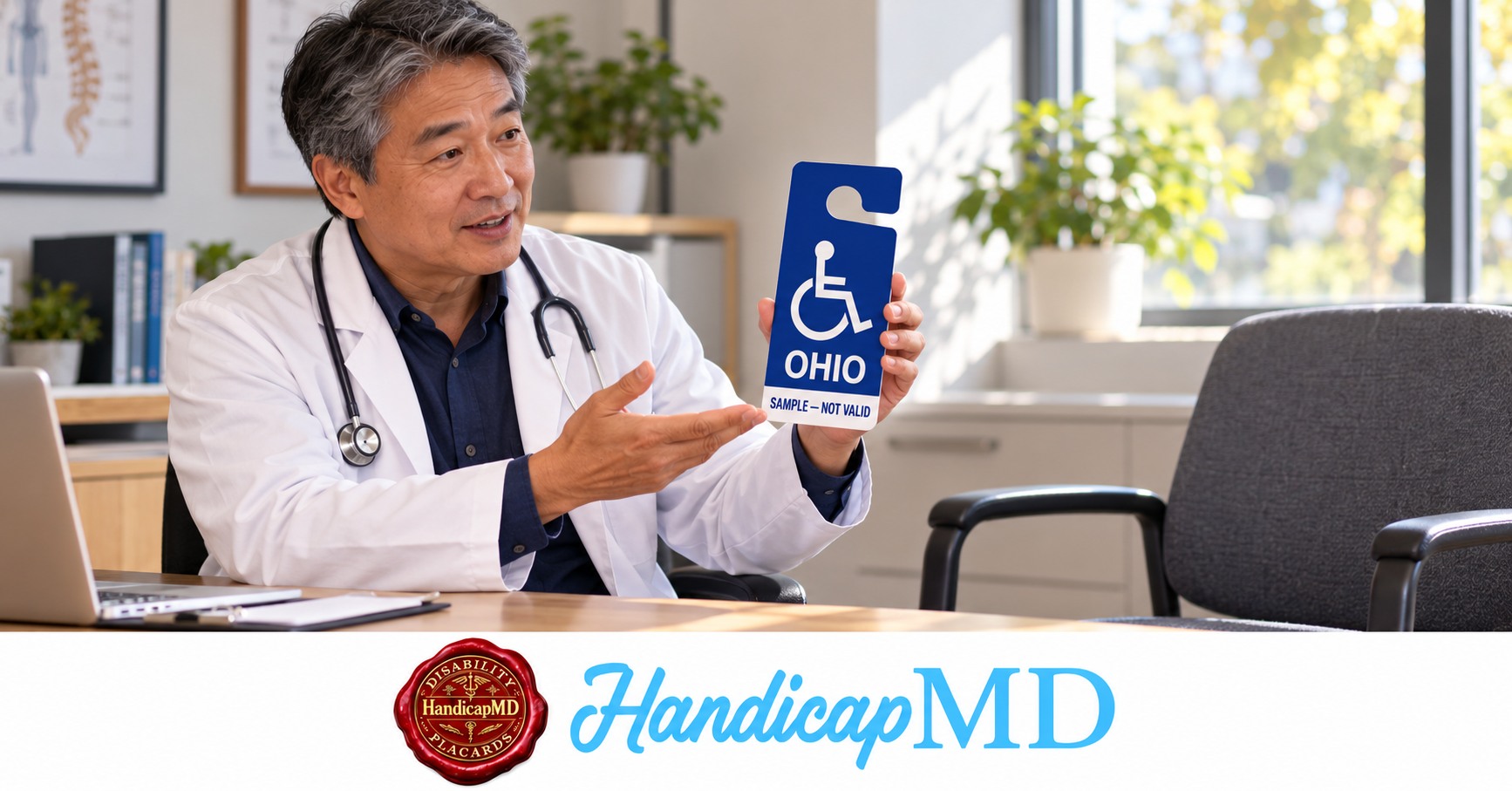

Existing guide helps people with MS explain walking limitations, prepare relevant records and understand state-specific medical certification.
LOS ANGELES, CA, UNITED STATES, October 24, 2026 /EINPresswire.com/ — HandicapMD is highlighting its existing multiple sclerosis handicap placard evaluation guide for people considering whether their walking limitations warrant a disability parking assessment. The resource connects practical questions about mobility, records and changing symptoms with the state-specific medical certification process.
Multiple sclerosis can affect everyday travel differently from person to person. Someone may walk independently on a short indoor route while needing assistance to reach a larger destination. Another person may experience recurring limitations that are difficult to summarize during a brief appointment. The guide helps applicants organize those facts without treating an MS diagnosis as an automatic parking approval.
Dr. Eric Jackson-Scott said, “An MS parking evaluation should connect the person’s actual mobility limitations with the state’s criteria. A diagnosis starts the discussion; it does not decide the application.”
Why the question deserves an individual assessment
The National Institute of Neurological Disorders and Stroke describes MS symptoms that can include muscle weakness, stiffness, fatigue and difficulties with coordination or balance. These effects can influence standing and walking, while their extent differs between individuals. The relevant parking question is how the person’s supported limitations relate to the issuing program’s requirements.
A clinical evaluation can consider the diagnosis alongside current function and expected duration. It should distinguish what the person experiences from what a particular state form asks the professional to certify. That approach allows a useful conversation without promising that everyone living with the same condition will receive the same credential.
Describe a route that matters in daily life
Preparation can begin with an ordinary destination: a medical appointment, a workplace entrance, a grocery store or a community activity. Explain the route from the car, the assistance normally used and what happens before reaching the entrance. If the distance is an estimate, identify it as an estimate rather than inventing a precise measurement.
An account becomes more useful when it connects a symptom with an activity. A report of leg weakness that increases before reaching the clinic door describes a different problem from the diagnosis alone. The clinician can ask follow-up questions and decide which details are relevant to the applicable eligibility category.
Include variation without changing the facts
A single day may not describe the full pattern. Applicants can explain their usual ability, recurring difficult periods and any recent change as separate observations. State how often a limitation occurs, what typically worsens it and what support makes the activity possible. Do not describe an occasional experience as constant or dismiss a recurring problem because one appointment went well.
NINDS notes that weakness and fatigue may worsen with heat or fever for many people with MS. When relevant, patients can describe the resulting effect on everyday mobility. Weather alone is not a parking criterion; the clinician needs to understand the actual functional limitation.
Keep assisted and unassisted walking clear
Someone who uses a cane, walker, wheelchair or another person’s assistance should describe that support honestly. Explain when it is needed and what the person can do with it. Completing a route with assistance does not necessarily describe the same ability as completing it without assistance. Conversely, owning equipment does not by itself establish a qualifying limitation.
Patients should retain needed aids and avoid deliberately exhausting themselves to create evidence. Existing clinical observations and truthful descriptions can guide the evaluation. Questions about equipment selection, safe use or transfer technique belong with the appropriately qualified treating or rehabilitation professional rather than an application checklist.
State criteria supply the actual standard
There is no single nationwide MS placard form. California DMV describes qualifying mobility impairments including a diagnosed disease that substantially impairs or interferes with mobility and inability to move without an assistive device. Texas’s VTR-214 identifies several mobility categories, including severe walking limitation from a neurological condition and inability to walk 200 feet without stopping to rest.
These examples show why the complete current instructions matter. They should not be combined into a new universal test. An applicant should use the issuing jurisdiction’s form, and the authorized professional should assess the category that the person’s clinical information actually supports.
What the medical certification step addresses
A parking evaluation considers whether the available medical and functional information supports the requested certification. Relevant questions may concern walking ability, necessary assistance, recurring difficulties and expected duration. The clinician may need clarification or additional records before reaching a conclusion. A paid appointment does not guarantee a signature or a particular credential designation.
The process is also separate from diagnosing or treating MS. A parking application should not replace neurological care, rehabilitation or assessment of a new symptom. Continue working with the treating team, and follow its instructions when health circumstances change. Certification should reflect the supported clinical situation at the time of evaluation.
Bring relevant records rather than an unsorted archive
Ask the evaluating service which information it needs and how to provide it securely. Existing neurology notes, rehabilitation observations or recent clinical documentation may help explain a limitation when relevant. Keep names and dates intact so the clinician can understand whose record it is and when the observation occurred. An older document can need current context.
Provide a short explanation of what has changed since an earlier assessment. Do not edit a clinician’s conclusions or ask for wording that overstates function. An accurate record can support a discussion without independently determining eligibility. The evaluator remains responsible for deciding whether the information is sufficient for certification.
When several limitations overlap
An applicant can have more than one health problem. Identify the known conditions and explain what the available records establish, without deciding independently which diagnosis caused every difficult step. If weakness, joint pain and a recent injury all affect a route, share that context. Include the dates of those clinical observations. The evaluating professional can determine which supported findings matter to the form and whether further information is needed.
Keep dates and changes understandable. A note from before an injury, a newer rehabilitation observation and today’s account can describe different circumstances. Explain the sequence so an old record is not mistaken for a complete description of current function. If information conflicts, raise the question rather than selecting whichever sentence sounds most favorable. A clear chronology supports an accurate assessment and leaves the medical judgment with the clinician who is evaluating the requested certification.
Preparing for an online evaluation
HandicapMD offers online disability parking evaluations in supported states and completes medical certification when clinically appropriate. Prospective patients should confirm service availability for their location and the relevant application before booking. The patient’s physical location during the appointment matters to the service arrangement; a destination visited later is a separate consideration.
Before the visit, arrange a usable connection, a private setting and any communication support needed to participate. Have the current application and requested records available. A companion can help with technology or organization while preserving the applicant’s own account. Explain a limitation in ordinary language rather than trying to perform a diagnosis or choose a legal category alone.
Temporary and permanent require careful reading
A lifelong diagnosis does not automatically settle the appropriate credential type. The professional must consider the qualifying limitation, its expected duration and the issuing program’s definitions. Temporary improvement, an uncertain recovery period or a changed clinical situation may affect the discussion. The applicant should describe those circumstances rather than selecting permanent status only to reduce paperwork.
Likewise, a permanent disability designation does not necessarily mean the physical placard never expires. Read the agency’s validity and renewal instructions separately. Keep the expiration date visible in personal records and ask the issuer which administrative steps apply. A renewal transaction is not automatically a request for another medical evaluation.
Questions for people who travel as passengers
Parking eligibility can matter to adults who do not drive and to people who depend on family transportation. The application should describe the eligible person’s needs, not only the driver’s convenience. Check the actual credential’s use rules and make a plan for the journey between the vehicle and the destination.
If a companion helps with an appointment, agree which tasks they will handle. The applicant may want assistance finding a record while answering functional questions themselves. Another person may need a different communication arrangement. Practical support should make participation easier without assuming that needing assistance removes the person’s preferences or role in the conversation.
A hypothetical example of useful preparation
Consider an applicant who manages the route to a small neighborhood office with a cane but uses a wheelchair for a large hospital visit. The helpful explanation includes the different routes, why the support changes and what happens when the longer route is attempted under ordinary circumstances. Neither device use on one trip nor independent walking on another decides the application by itself.
The applicant can bring that comparison to an authorized clinician alongside relevant records. The clinician then considers the actual state category and any remaining questions. This example illustrates preparation, not a prediction that a particular person qualifies or a recommendation to test walking limits.
Review the whole application before submission
Medical certification is one part of the government process. Applicant identification, residence information, signatures, dates and credential selection can require separate attention. Review the current instructions for the correct receiving office and submission method. Do not assume every state allows the same upload process or accepts the same certifier categories.
Applicants should keep copies of submitted materials and agency responses. Returned applications may involve applicant details, medical questions or other administrative requirements. The responsible person should address the identified issue. Another professional’s signed medical finding must remain intact unless that professional reviews and appropriately corrects the relevant submitted clinical documentation.
Issuance and everyday use are separate steps
The designated government agency reviews the application and issues the parking credential. A completed medical form or appointment receipt should not be treated as a substitute for an issued, valid placard. While waiting, organize lawful parking and assistance that do not rely on a permission that has not been granted.
Once a credential is issued, read its display, expiration and use instructions. A placard can support access to designated parking under the applicable rules, but it does not reserve a space or answer every question about the route inside a building. Ask the destination about entrances, seating and assistance relevant to the actual visit.
Choosing the appropriate next step
The national disability parking eligibility guide provides a broader comparison of qualifying categories and certification requirements. Use it alongside the current state application, rather than importing another state’s wording into an MS evaluation. The focused resource explains how to organize the condition-related mobility information before that professional conversation.
People with a new application question can explore HandicapMD’s evaluation process and confirm availability. Existing holders seeking an ordinary replacement or administrative renewal should first identify the issuer’s requirements for that transaction. The useful next step is the one that addresses the actual need, with medical judgment, application review and ongoing neurological care each handled in its proper setting.
About HandicapMD
HandicapMD provides online medical evaluations related to disability parking certification. When supported by the clinical assessment and applicable requirements, a licensed clinician completes the medical portion of the relevant application. The company’s educational resources explain state processes and help residents prepare questions. Government agencies retain responsibility for reviewing applications and issuing parking credentials.
https://www.handicapmd.com/
Crystal Dennon
HandicapMD
help@handicapmd.com
Qualifying Conditions for a Disabled Parking Permit
Legal Disclaimer:
EIN Presswire provides this news content “as is” without warranty of any kind. We do not accept any responsibility or liability
for the accuracy, content, images, videos, licenses, completeness, legality, or reliability of the information contained in this
article. If you have any complaints or copyright issues related to this article, kindly contact the author above.

Media gallery


