All County Collision Publishes Consumer Guide to Collision Damage Around Vehicle Cooling Components
EUSTIS, FL - October 28, 2026 - PRESSADVANTAGE - All County Collision has published consumer guidance explaining how a
Press Release Disclaimer: This is a press release distributed through the XPR Media network. It has not been independently verified by our newsroom.
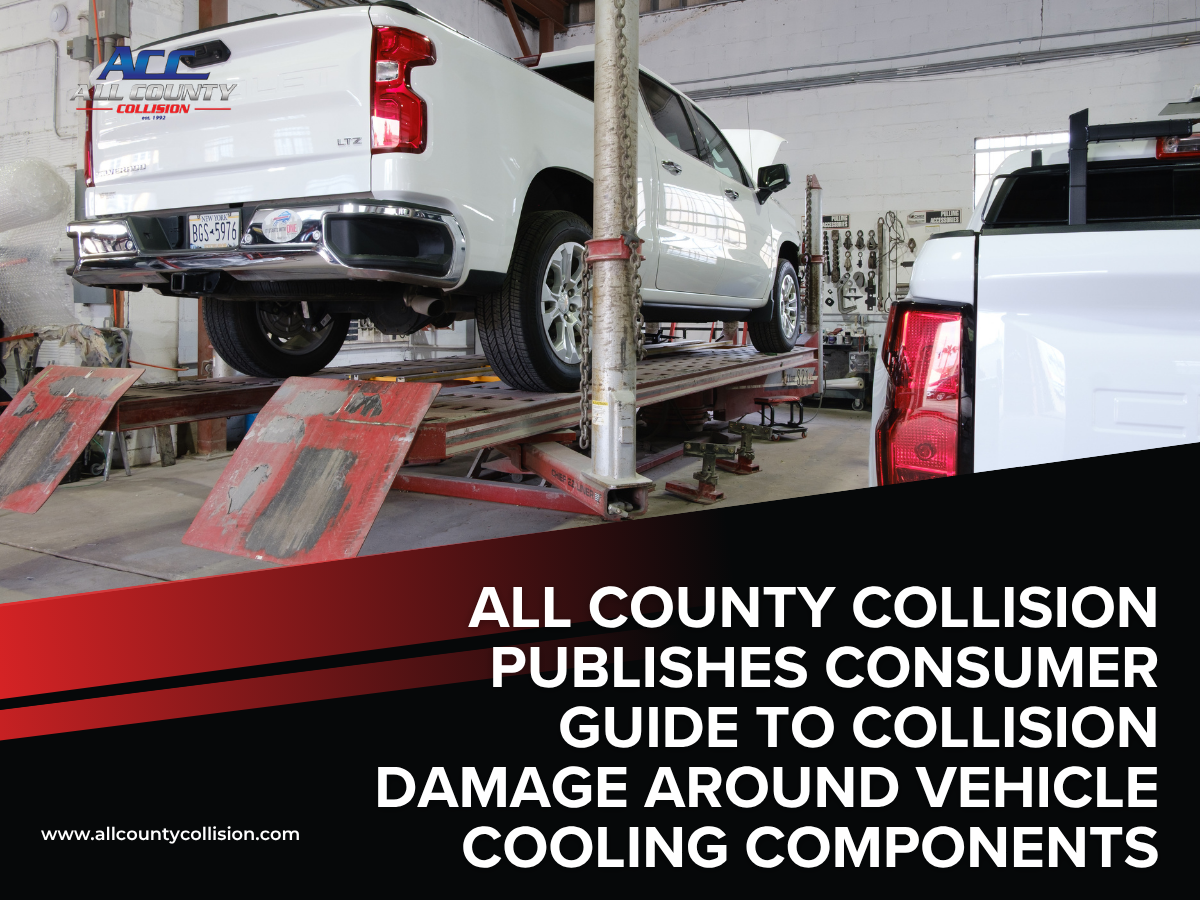

EUSTIS, FL – October 28, 2026 – PRESSADVANTAGE –
All County Collision has published consumer guidance explaining how a front-end collision can affect vehicle cooling components located behind or near visible exterior body parts. The October publication focuses on three connected areas that can influence repair planning: cooling-system components, their mounting locations and connections, and the surrounding collision-damaged body area.
The guidance expands on All County Collision’s collision repair information by addressing why damage near the bumper, grille, hood, or front body panels can warrant evaluation beyond the exterior surface. Components such as radiators, condensers, cooling fans, hoses, and related mounting hardware can be positioned within the same general area affected during a front-end impact.
Visible body damage does not by itself establish the condition of these components. A cracked bumper cover, damaged grille, bent hood, or displaced fender can identify where an impact occurred, while components positioned farther behind the exterior surface may require separate evaluation.
The radiator is one example. Its location toward the front of many vehicles can place it near the collision area during certain frontal impacts. Technicians can evaluate the radiator itself along with mounting points, connections, and surrounding components when the documented damage reaches that area.
Air-conditioning condensers can also be positioned near the front of the vehicle. Although a condenser and radiator perform different functions, their proximity means collision damage can involve more than one component within the same general front-end area.
Cooling fans and their associated housings or mounting areas provide another consideration. Depending on vehicle design, these components can be positioned behind the radiator or other heat exchangers. Changes to nearby mounting locations can therefore become relevant even when a fan assembly does not show obvious exterior damage.
This is the first distinction emphasized in the October guide. Damage to the visible front body is evaluated separately from the condition of mechanical components located behind it. The repair scope is based on what the individual collision actually affected rather than an assumption that every front-end accident produces cooling-system damage.
Connections and mounting locations form the second part of the guide’s framework. Cooling-related components depend on brackets, supports, hoses, lines, fasteners, and other connections to remain positioned and operate as designed. An impact can affect these areas differently from the component itself.
Fluid leakage can provide an observable indication that further evaluation is appropriate. A new puddle or dripping fluid after a collision can be documented along with the location and circumstances of the impact. The presence or appearance of fluid alone does not establish which component has been damaged, so identifying the source is part of the evaluation.
The surrounding collision area provides the third consideration. Front-end components fit within a connected assembly that can include the bumper, grille, hood, fenders, lamps, supports, and other vehicle-specific parts.
All County Collision’s collision repair process provides additional context for how technicians can gain more information as damaged components are inspected and, when appropriate, removed. Access to the collision area can reveal mounting locations and mechanical components that were difficult to evaluate during the initial exterior assessment.
Repair sequencing can become important when body and cooling-related damage occur together. If an impact has changed a mounting or support area, the documented condition of that area can be addressed as part of planning the work associated with the components it supports.
Vehicle construction also varies considerably. The number, position, and configuration of radiators, condensers, cooling fans, heat exchangers, hoses, and related components depend on the individual vehicle. Hybrid, electric, and conventionally powered vehicles can also use different thermal-management arrangements.
For this reason, the October guidance emphasizes vehicle identification and applicable manufacturer repair information rather than presenting a single cooling-system layout for every vehicle.
The publication also distinguishes collision-related cooling-component evaluation from routine mechanical maintenance. Its focus is specifically on whether an impact has physically affected a component, connection, mounting location, or surrounding area associated with the vehicle’s cooling or thermal-management systems.
Vehicle owners may observe changes following a front-end collision that provide additional information during inspection. These can include visible fluid leakage, a new warning message or temperature indication, unusual fan operation, or damage near the grille and other openings associated with front-end airflow. Such observations do not diagnose the cause by themselves but can be documented for evaluation.
The new October guide gives consumers a component-based way to understand why front-end collision repair can extend beyond replacing or refinishing the parts visible from outside the vehicle. The exterior body, cooling-related components, and the mounting areas connecting them occupy the same collision region but require individual evaluation.
The publication does not suggest that every front-end impact damages the radiator or other cooling components. Instead, it explains why the condition of these parts can be considered when the location and direction of collision damage place them within the affected area.
Information about the facility is available through All County Collision’s Eustis location.
All County Collision provides collision repair and auto body repair services for vehicle owners in Eustis and surrounding Central Florida communities. The facility is located at 25 S Bay St, Eustis, FL 32726, United States.
###
For more information about All County Collision, contact the company here:
All County Collision
Ryan DeMarco
3523574599
ryan@allcountycollision.com
25 S Bay Street, Eustis, FL 32726